

Invited channels only
Gini reads a channel only after a human invites it in. No workspace-wide ingestion, ever. Remove it and its access ends with the membership.
Gini's trust model isn't a policy document, it's built into how it works. This page covers the mechanics, how your data is handled, and where our SOC 2 audit stands.
Gini reads a channel only after a human invites it in. No workspace-wide ingestion, ever. Remove it and its access ends with the membership.

Gini asks before it sends, spends, submits, or purchases on your behalf, and the run waits until a person answers. Every action is audited, whether you approved it or policy did.

Integrations are scoped to the person who connected them. Gini acts with your Stripe access only on your say-so, and a tool you connect read-only cannot write at all.
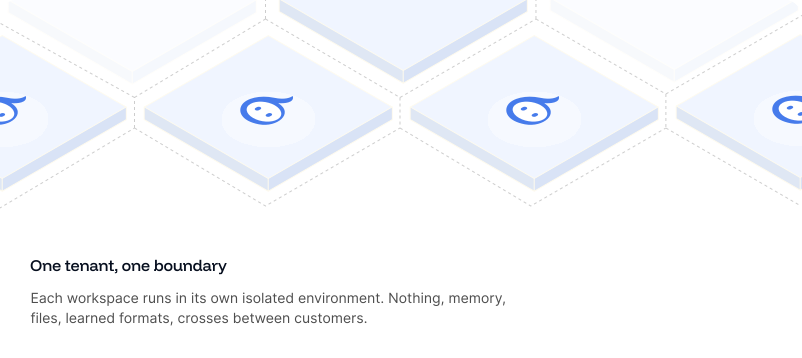
Each workspace runs in its own isolated environment. Nothing, memory, files, learned formats, crosses between customers.
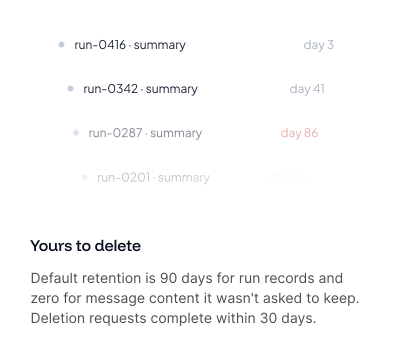
Your environment keeps context so Gini can keep working. Delete anything, or all of it, at any time; deletion requests complete within 30 days.
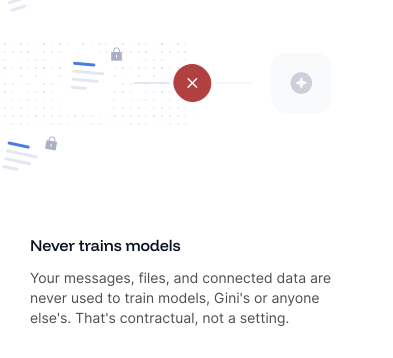
Your messages, files, and connected data are never used to train models, Gini's or anyone else's. That's contractual, not a setting.
 Gini runtime
TLS 1.3 in transit, AES-256 at rest. Integration credentials live in a separate vault with per-tenant keys.

Pen-test summary is available on request. For privacy or processing questions, write privacy@ginicomputer.com.
Compliance
Our Trust Center holds our security, compliance, governance, and trust documentation, and shows the controls we monitor, live. The report will be available there when the audit completes.
Gini can be wrong. It cites its sources so you can check them, shows its plan so you can stop it, and asks before anything leaves, so mistakes stay reversible. If a tool returns an error, it stops and says so, it doesn't retry sensitive actions on its own.